

Retiring the old phone system killed the burglar alarm's dial-out line

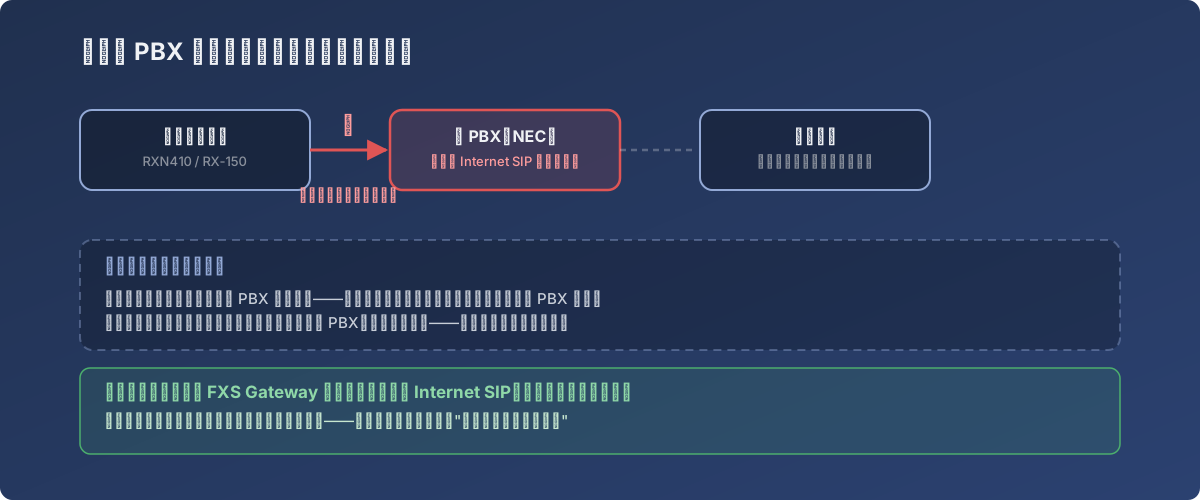
The office phone system was migrating from a legacy PBX (an NEC switch) to Internet SIP. Once the new lines proved stable, the plan was to formally shut down the old switch. The final round of pre-shutdown testing unearthed a dependency nobody had anticipated: the burglar alarm system’s outbound dial line had been quietly attached to the very switch being retired.
Finding it: the good habit of testing before shutting down
Rather than killing the old hardware outright, the team ran a “simulated offline” test first — cutting power to the old switch and checking whether each alarm extension could still dial out. The result:
- Some alarm extensions (Lab, HQ) still dialed out fine with the switch off, confirming they ran on independent phone lines unrelated to the old switch;
- One extension (the internal IT one) stopped working once the switch was off, sounding a “Phone Line Fault” tone.
Without this test, shutting the old switch down outright would have silently killed that alarm extension’s ability to call out — and the failure would most likely surface at the worst possible moment: during a real intrusion, when the system actually tries to dial for help.
Security systems’ communication lines rarely appear on any network topology diagram
Investigation: power down one at a time, narrow it down
The old switch was made up of several subsystem cabinets (System 1 through 4). The method: disconnect cables one at a time while watching how the alarm extensions respond:
- Disconnect System 4, then System 3’s cables in sequence, noting which extension is affected each time;
- Trace the affected extension to one specifically labeled cable;
- Further confirm: even with the entire old switch (Systems 2, 3, 4) fully powered down, the other extension still dials out fine — proving it never ran through this system at all; it’s on an independent line. The initial “shared line” hypothesis was wrong — the two extensions were failing for entirely different reasons.
The fix
For the extension confirmed to depend on the old switch: add an FXS Gateway (a device that converts an analog phone line to VoIP), translating its analog signal into Internet SIP and registering it as a dedicated extension on the new phone system — replacing the path that used to route through the old switch.
Lessons
- Before retiring any “just a phone/network device” piece of legacy hardware, assume something is quietly hanging off it. Security systems’ (alarms, access control) communication lines almost never appear in any formal network topology document — only a live test on site can surface them;
- A “simulated offline” test is cheap insurance: a power-off test costs barely more time than a real shutdown, but it catches problems (like a disabled burglar alarm) before they actually happen;
- When investigating a suspected “shared line,” don’t assume every similar symptom shares the same root cause — here, the two alarm extensions were failing for completely different reasons: one genuinely shared the old line, the other was independent but happened to show a similar symptom around the same time. Treating all symptoms as one problem would have caused the second, unrelated issue to be missed entirely.