

Changing a Microsoft account's security email: why it takes 30 days
Handing over a shared-use Microsoft account required swapping its “security info” (the backup email used for password recovery / second-factor) from the old owner to the new one. After submitting the change, the page read:
Your security info change is still pending. On [date] you requested that your security info be replaced.
Seeing “pending” invites the assumption that the submission failed or got stuck — it didn’t. This is designed behavior, not a fault.
This is an anti-hijack mechanism, not a bug
The page spells it out plainly:
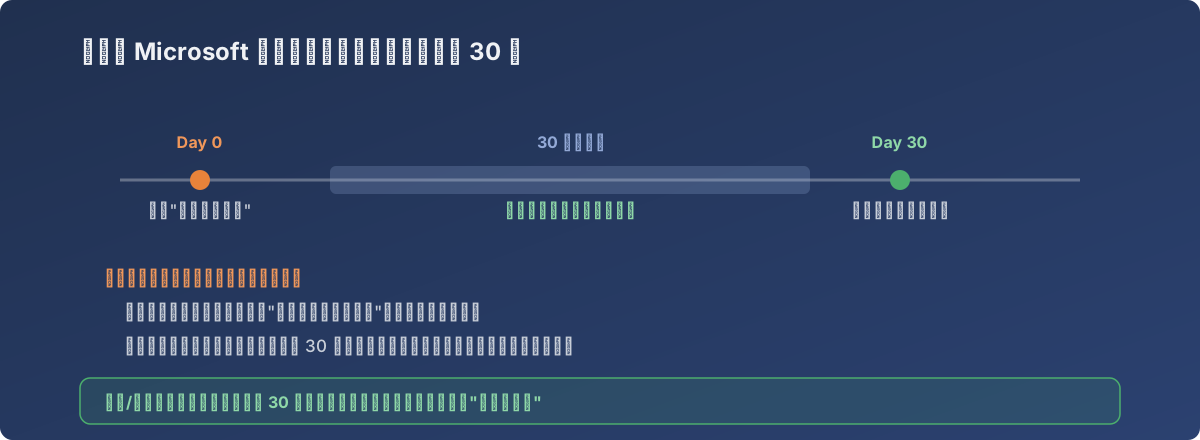
Your security info will be replaced after 30 days. But don’t worry, during the waiting period you can still sign in and use your Microsoft account normally.
Not slowness — a deliberately engineered window
Microsoft’s reasoning for a 30-day wait is direct: if this change was initiated by an attacker who obtained the password but hasn’t fully taken over the account, the real owner has a 30-day window to spot the notification and cancel it with one click. Once the security info is actually swapped, an attacker could use the new email to reset the password and fully seize the account — so Microsoft deliberately slows this specific step down, buying the defender reaction time.
What to watch for during a handover
- Both emails stay valid during the wait — it’s not “new takes effect instantly, old dies instantly”; they coexist until the 30 days elapse. Say this explicitly in the handover documentation so nobody mid-transition assumes “why hasn’t it switched yet”;
- If you’re the one who initiated the change, do nothing — it takes effect automatically after 30 days;
- If you find a change you never initiated, the page offers “let us know” and “cancel this request” links — an emergency exit for the real account owner. Clicking it promptly stops a real hijack attempt.
Lessons
- Seeing a Microsoft security change sitting in “pending” — check first whether it’s this kind of deliberate cooldown window before treating it as a fault to troubleshoot;
- When planning any account handover, check upfront whether the target system has a similar cooldown, and build it into the handover timeline to avoid repeated “why hasn’t this taken effect” questions;
- This waiting-period mechanism is itself worth learning from — adding a “delayed effect + cancellable” window to sensitive, irreversible account changes is a generally good anti-social-engineering pattern, worth borrowing for your own systems’ sensitive operations too.